Measure the plaster area
Enter wall length and height, then select the number of faces to cover. Two faces means two equal areas. For different walls, calculate each surface separately. Openings are deducted as a total area in square metres across all selected faces, so do not enter a per-face deduction unless only one face is selected.
Measure the plaster layer thickness independently from the wall thickness. The default is 12 mm. If a specification calls for multiple coats, estimate each coat using its own thickness and mix; a finishing coat may use a different product from the base layer.
Cement and sand calculation
Wet plaster = net area × thickness
Dry material volume = wet plaster × (1 + waste ÷ 100) × 1.33
Cement volume = dry volume ÷ (1 + sand parts)
Sand volume = dry volume × sand parts ÷ (1 + sand parts)
The volume estimate is based on an even layer. Rough masonry, hollows, uneven backing and local thick spots increase consumption. A measured average thickness is more useful than a nominal thickness that does not match the wall condition.
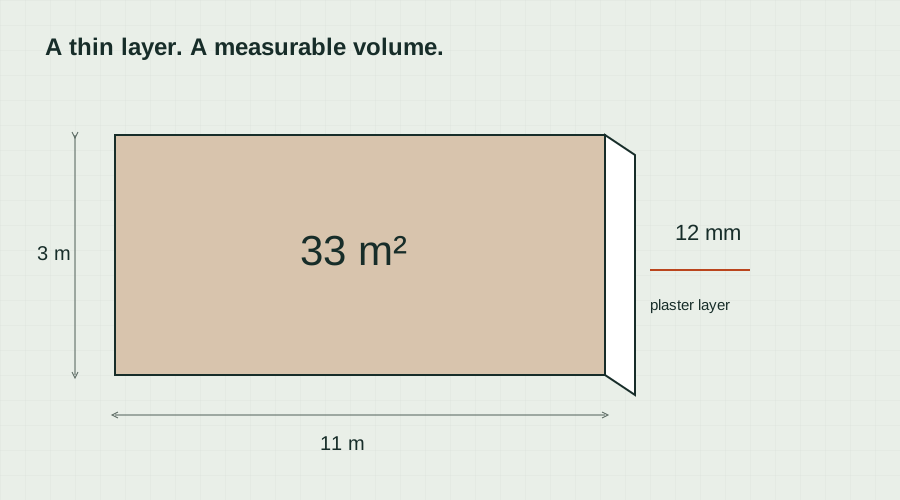
Worked example: 33 m² at 12 mm
An 11 m × 3 m face has 33 m² of area. At 12 mm, the wet plaster volume is 33 × 0.012 = 0.396 m³. With no waste and a 1.33 dry factor, the loose dry materials total 0.52668 m³.
At a 1:4 cement-to-sand ratio, cement occupies 0.105336 m³ and sand occupies 0.421344 m³. Cement at 1,440 kg/m³ weighs 151.68 kg, or 3.034 of the 50 kg bags. At a 5% allowance, cement becomes 159.27 kg and sand becomes 0.44241 m³. Both scenarios round up to 4 whole cement bags for a separate order.
Choose assumptions that fit the job
Common selectable cement-to-sand estimates include 1:3, 1:4, 1:5 and 1:6, with an editable sand-part input for other ratios. The correct product and ratio depend on the substrate, exposure, finish and project specification. A general calculator cannot choose that specification for you.
The dry factor defaults to 1.33. Bulk densities default to 1,440 kg/m³ for cement and 1,600 kg/m³ for sand. These are disclosed planning values rather than guarantees about your delivery. Use supplier data where available, especially if your sand is damp or measured by a different batching method.
Waste is applied to the wet volume before splitting materials. The default 5% allowance is a starting point; poor wall alignment, dropped mortar and difficult working conditions may need a different allowance. Buying full bags and ordering loose sand also introduce rounding outside the pure volume model.
This calculator estimates a site-mixed cement-and-sand plaster. It does not model gypsum plaster, lime mixes or proprietary premixed bags. For a factory product, use the manufacturer’s coverage per bag at the specified thickness, including its substrate preparation requirements.
Plaster calculator questions
Are doors and windows included?
They are included in the rectangular wall area until you enter an opening deduction. Reveal edges, jambs and soffits may still need plaster and should be estimated separately.
Can I estimate an entire room?
Calculate the walls by their actual dimensions. Add a ceiling separately. Only use the faces multiplier when those surfaces really have identical length and height.
Does the sand mass include water?
No moisture correction is modelled. The mass is volume multiplied by the density you enter. A damp-sand delivery can have a different mass and bulk volume.
Can I use this for a finished cost quote?
The tool estimates material quantities only. It excludes labour, access, surface preparation, primers, transport, taxes and the supplier’s prices.